What would Cuban property be worth if the embargo ends? Lessons from four markets
By Buy House Cuba ·
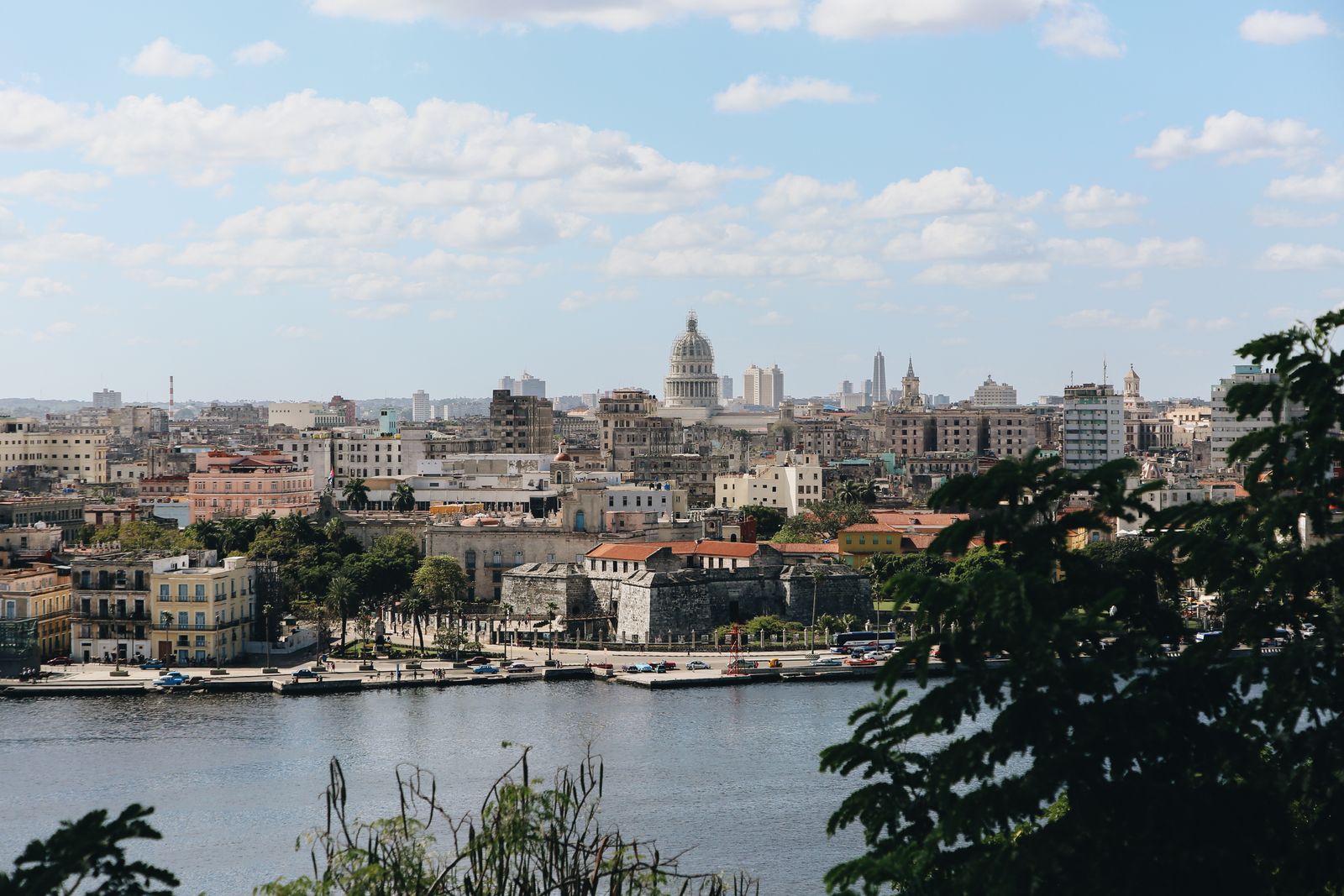
When people ask what a Havana apartment could be worth “when Cuba opens,” the best way to answer may be to look at places that already have done so and have similar histories. None of them is a perfect match. Cuba combines a post-socialist restitution problem like Eastern Europe’s, a diaspora ninety miles away that no other opening has, Caribbean tourism potential like the Dominican Republic’s, and an opening that depends on US sanctions and can be reversed, like Myanmar’s. But four cases bracket the range, and one of them is a warning.
All figures below are nominal and sourced; I have tried to note the crashes as carefully as the booms.
Eastern Europe after 1990: four to six times in twenty years, with a crash in the middle
Czech Republic. The Czech Statistical Office’s apartment price index shows prices rising 4.25 times nationally and 5.25 times in the Central Bohemian region, including Prague, between 1998 and the end of 2019, about 7% a year. They more than doubled by 2003, tripled by 2008, and then fell 18% in 2009 before resuming.
Estonia. Two-bedroom apartments in Tallinn rose 449% between 2000 and 2007. Then they fell 20% in 2008 and another 34% in 2009. Since 2010, they have compounded at roughly 8% a year, and Tallinn today sits around €3,100 per square meter, about five to six times its 2000 level.
Poland. Prices rose 29.5% in 2007 alone, corrected for six years, and rose 16.4% in 2024. Warsaw secondary-market apartments were about 16,400 zloty per square meter in early 2026.
Notice the starting point. These series begin in the late 1990s, roughly a decade after the political change, because before that there was no functioning market to measure. The gains came after restitution and privatization created clear titles, after mortgages arrived around 2000, and after EU accession in 2004 anchored expectations. The years right after the revolution were not a buying opportunity; they were chaos.
Vietnam after 2015: roughly three times in a decade
Vietnam’s economic reforms started in 1986, but foreigners could not buy homes until the 2015 Housing Law, which capped foreign ownership at 30% of the units in any building, or 250 houses per ward, on 50-year renewable terms. In the first five years, about 16,000 homes were bought by foreigners, four-fifths of them in Ho Chi Minh City, and most of those buyers were Chinese, Korean, Japanese, and Singaporean, not Western.
Central Ho Chi Minh City apartments went from about $1,200 per square meter in 2015 to roughly three times that by 2025, with new luxury units far higher. Prices rose 75% between 2017 and 2019 and up to 33% in 2024 alone. The driver was 6–7% annual GDP growth and foreign direct investment, far more than the foreign home buyers themselves. The lesson: the opening to foreign buyers was a symptom of a growing economy, not the cause of the price rise.
Dominican Republic: six to ten percent a year, in a market that works
The DR has no restrictions on foreign buyers and has had a functioning market for decades, so it is the picture of what a mature Caribbean tourism market looks like rather than an opening. Prices grew about 6% a year from 2005 to 2019, then 12.5% in 2024 and 10.3% in 2025, roughly 50% nominal over five years. Santo Domingo averages about $1,870 per square meter; Punta Cana apartments about $2,370. Tourism hit a record 11.7 million visitors in 2025.
The comparison to Cuba is pointed. Cuba drew 4.7 million visitors in 2018. In 2025 it drew 1.8 million, the fewest since 2002, and arrivals in the first eight months of 2026 were down 64% on the same months of 2025. The DR is what a Cuban market could look like ten years after a real opening, not the year after.
Myanmar after 2011: the one that went wrong
Myanmar’s 2011 reforms produced the fastest property boom of any opening on this list. Yangon land tripled or quadrupled within months on the expectation of foreign investment, and downtown land briefly cost more per square foot than Bangkok. By 2018, with reforms stalled and foreign investment approvals down 40%, office rents had fallen 25–30% in two years and property prices about 35%. After the 2021 coup, property became a hedge against a collapsing currency, so nominal prices doubled again while the economy fell apart. That is a gain that means nothing.
Cuba has already had a smaller version of this cycle. Prices and foreign interest peaked around the December 2014 thaw and the March 2016 Obama visit, then slid through the US rollback, the pandemic and the emigration wave until Havana asking prices were 40–50% below the peak. Brokers reported the first uptick this spring, driven by Cuban-Americans betting on change. Today’s Havana prices by municipality are here. Expectation-driven markets can give back a third to half of a spike when the opening does not arrive.
Albania, briefly
Albania’s 1996–97 pyramid schemes ran up liabilities equal to almost half the country’s GDP and collapsed into civil unrest. Decades of informal construction and unresolved restitution left Tirana with contested titles that still complicate the market. It is on this list because openings with weak title systems attract fraud aimed at exactly the “get in early” audience, and Cuba will be no exception. Anyone offering you a “pre-sale” or “reservation” on Cuban property today is either breaking US law, unable to deliver, or both.
What does this say about Cuba?
Three things, none of them a forecast.
First, the range is wide. A functioning Caribbean tourism market compounds at 6–10% a year. A post-socialist capital can do four to six times over twenty years. A stalled opening can hand back a third of the gains.
Second, the timing is later than people think. In every successful case, prices moved after clear title, mortgage finance and stable institutions existed, typically years after the political change. Cuba’s title problem, with 5,913 certified US claims and an uncounted number of Cuban-American ones, is bigger than any of these countries faced.
Third, the upside is in location, not structures. Cuba’s housing stock is in poor condition, with a national deficit of more than 800,000 units and a third of existing homes in fair or poor shape. Whatever a Vedado apartment is worth in an opening, most of that value is the fact that it is in Vedado.
Our estimator on the home page lets you take today’s Havana asking price for a neighborhood and apply any of these growth ranges over the years you choose. It is an illustration of ranges. The stalled-opening case is in there on purpose.
Sources
- Expats.cz / Czech Statistical Office, “Apartment prices in the Czech Republic have more than quadrupled since 1998”
- Global Property Guide price histories: Estonia, Poland, Vietnam, Dominican Republic
- Vietnam Law Magazine, “New property policy lures overseas Vietnamese, foreigners” (2015) and “Foreigners purchased about 16,000 real estates in Vietnam” (2020)
- VietnamNet, “HCM City apartment prices soar” (2025)
- The Rio Times, “Cuba tourism falls 64.4%” (2026); Hosteltur, “Cuba cierra 2025 con el peor dato de turistas desde 2002”
- The Diplomat, “Burma real estate: boom or bust?” (2012); Asia Times, “Myanmar property falls back to earth” (2018); The Star, “‘Crazy’ Yangon property prices despite struggling economy” (2026)
- IMF Staff Papers, Chris Jarvis, “The Rise and Fall of Albania’s Pyramid Schemes” (2000)
- Directorio Cubano, “Mayor interés por comprar casas en Cuba”, April 2026
- CiberCuba, “Cuba needs over 800,000 homes”, July 2025
Get the free report: what Cuban property could be worth
Not yet. Get the free report on what Cuban property could be worth when that changes, and be first to know when it does.